Face recognition ability
Why face recognition ability varies — and how it can be measured in real-world contexts.
Research
We study how people recognise faces, remember events, and judge identity — especially in high-stakes settings like policing, security, and digital systems where mistakes have real consequences.
Used by 500,000+ participants · Applied in policing and intelligence · Award-winning research
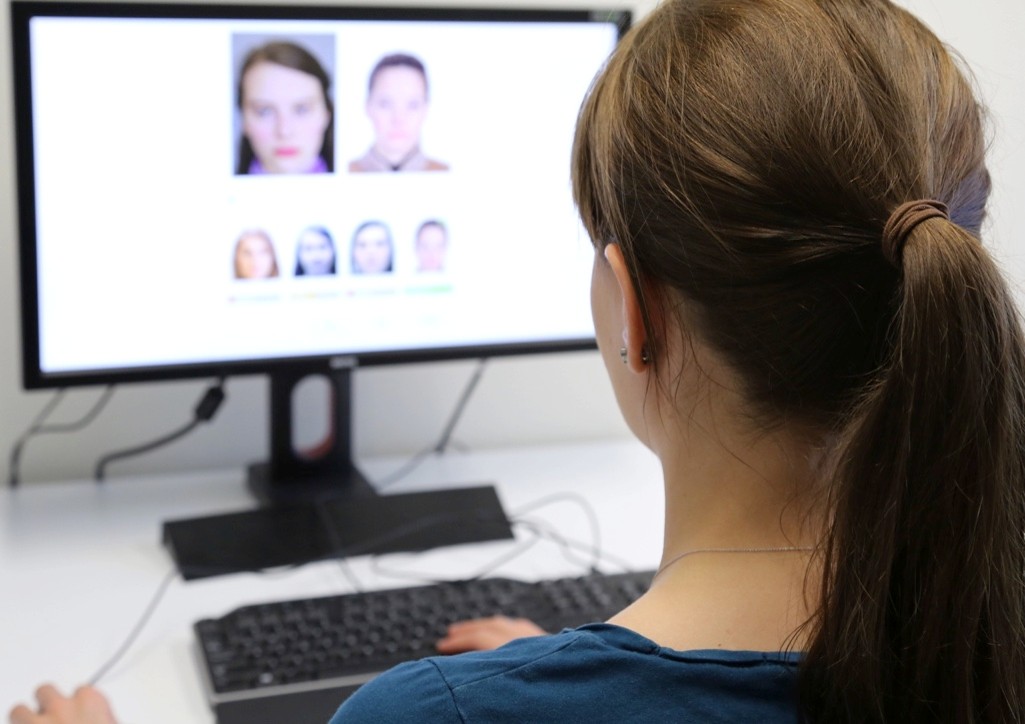
Overview
Every day, people make decisions about identity — comparing faces, recalling events, deciding whether two images show the same person, or judging whether a face is real or AI-generated.
These decisions are often made under uncertainty, yet they carry real consequences: wrongful identification, missed matches, or misplaced trust in AI systems.
Our research asks a simple question: when are people accurate, when are they not, and how can these decisions be improved?
Research themes
Why face recognition ability varies — and how it can be measured in real-world contexts.
How stress and confidence shape memory reports, evidence, and identity decisions.
Why synthetic identities are difficult to detect, and what this means for online trust.
How AI changes identity decisions — and how systems can be designed to reduce error.
Research innovations
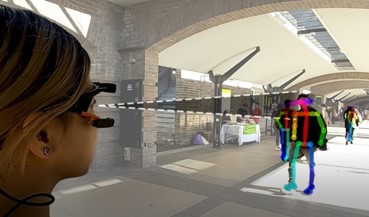
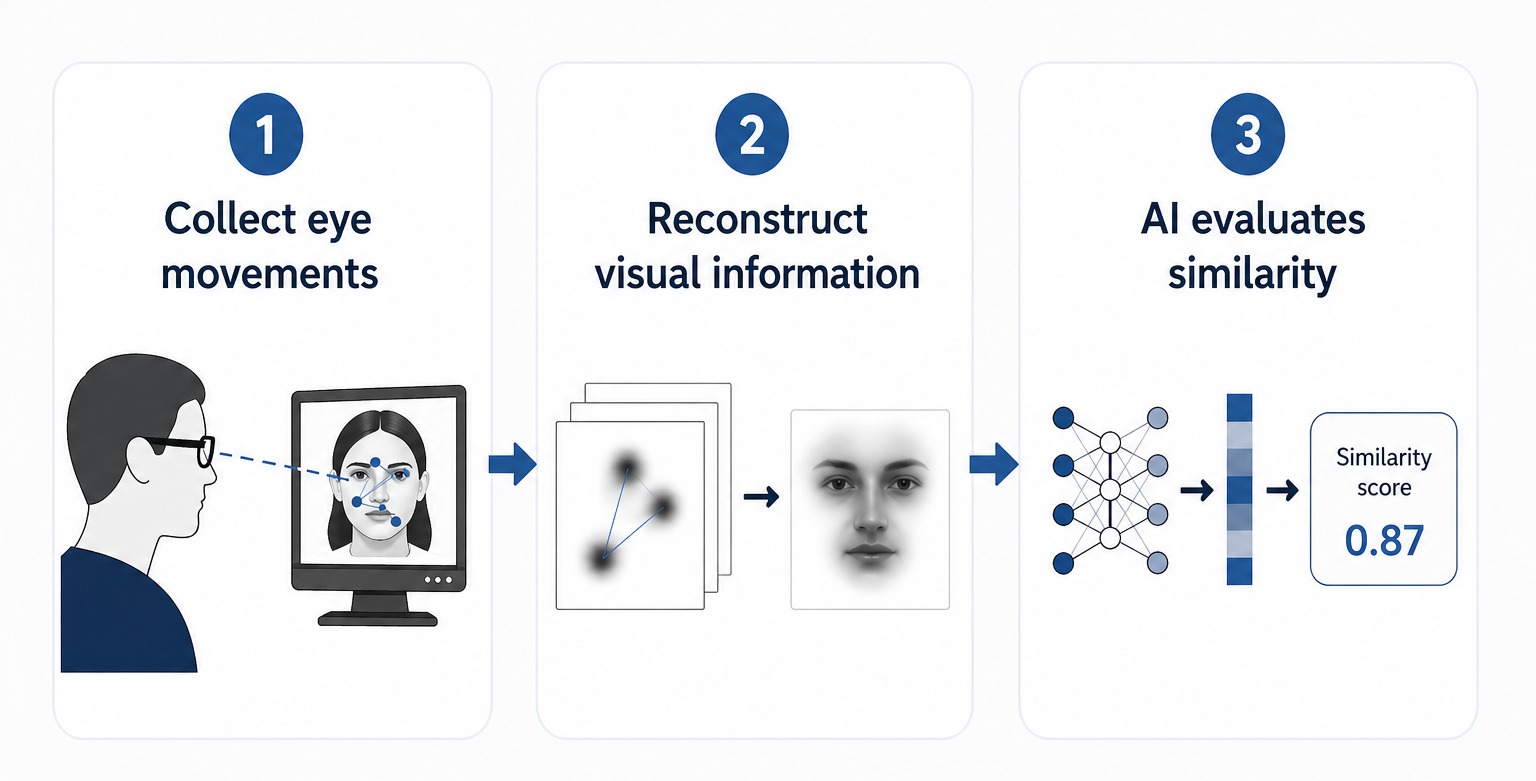
Tracking where people look when comparing faces to understand decision strategies.
Modelling decision processes and studying how people interact with AI-generated identities.
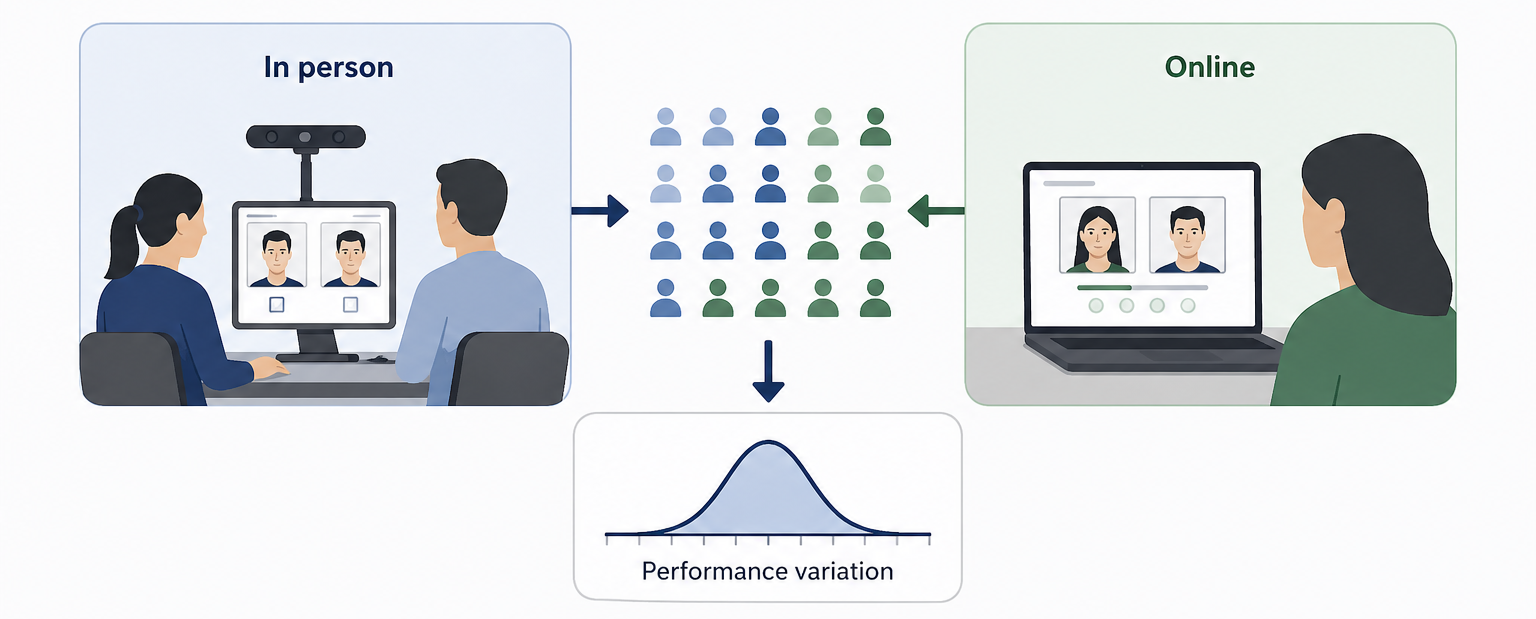
Measuring variation in cognitive ability and decision-making across large participant samples.
Key findings
Some people are exceptional with faces, while others struggle with the same tasks.
People tend to overestimate their ability to detect AI-generated identities.
AI systems can change how people interpret faces and judge identity.
Identifying high-performing people can improve accuracy in applied settings.
Impact
Research from the lab is used in policing, intelligence, and public-facing tools, with measurable impact across real-world systems.
Research has informed personnel selection and deployment for specialist face identification roles.
Briefings and collaborations support identity verification policy and applied AI discussions.
Research on memory under stress informs structured recall protocols for policing contexts.
Approach
We design tasks that reflect real-world decisions: comparing faces, recalling events, and identifying people under uncertainty.
This includes controlled experiments, large-scale online testing, and collaborations with organisations that make identity decisions in practice.
Try the research tasks:
By combining laboratory precision with applied settings, we identify where errors occur — and how they can be reduced.
Next step
We collaborate with researchers, students, industry, and government on applied problems in identity, decision-making, and AI.